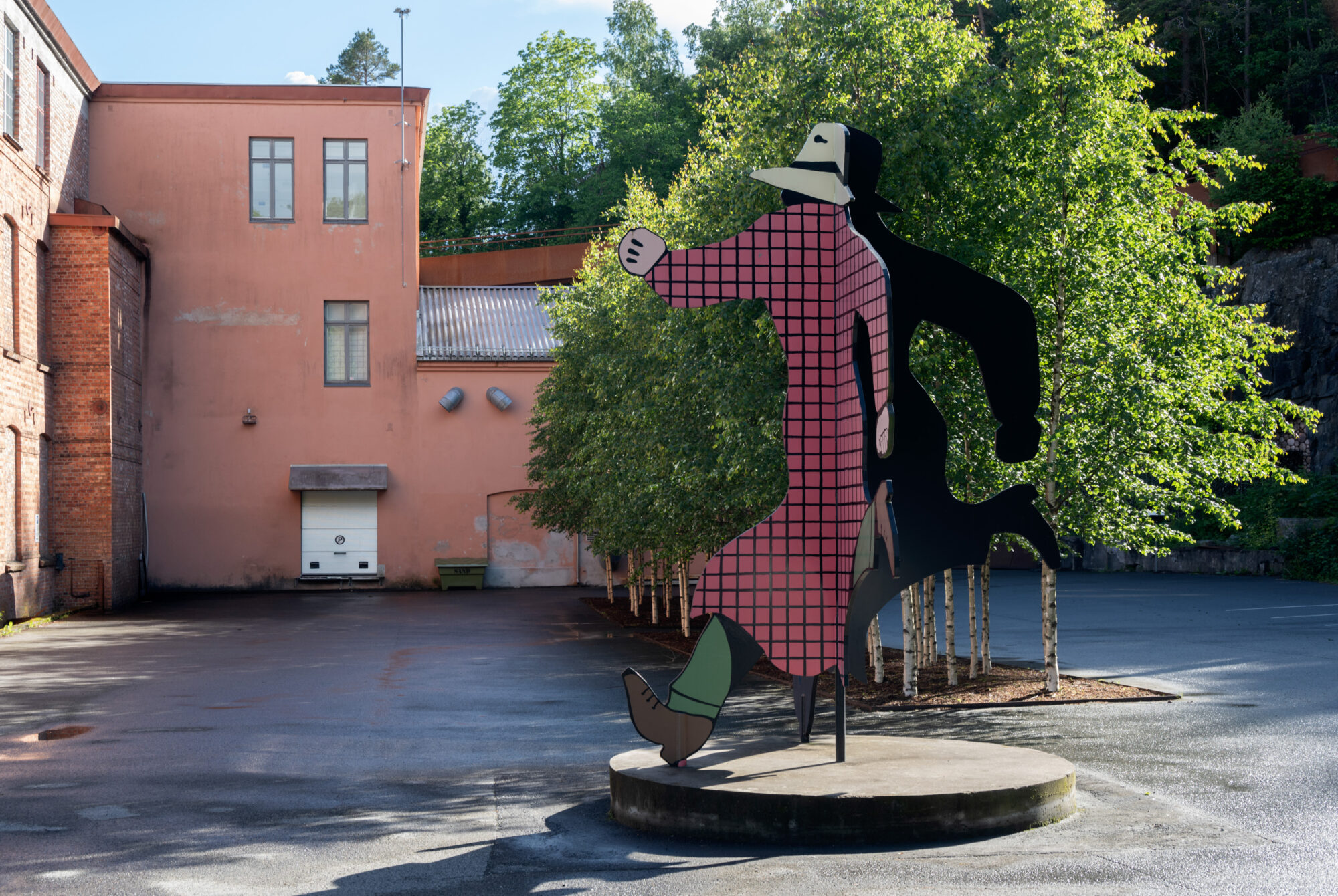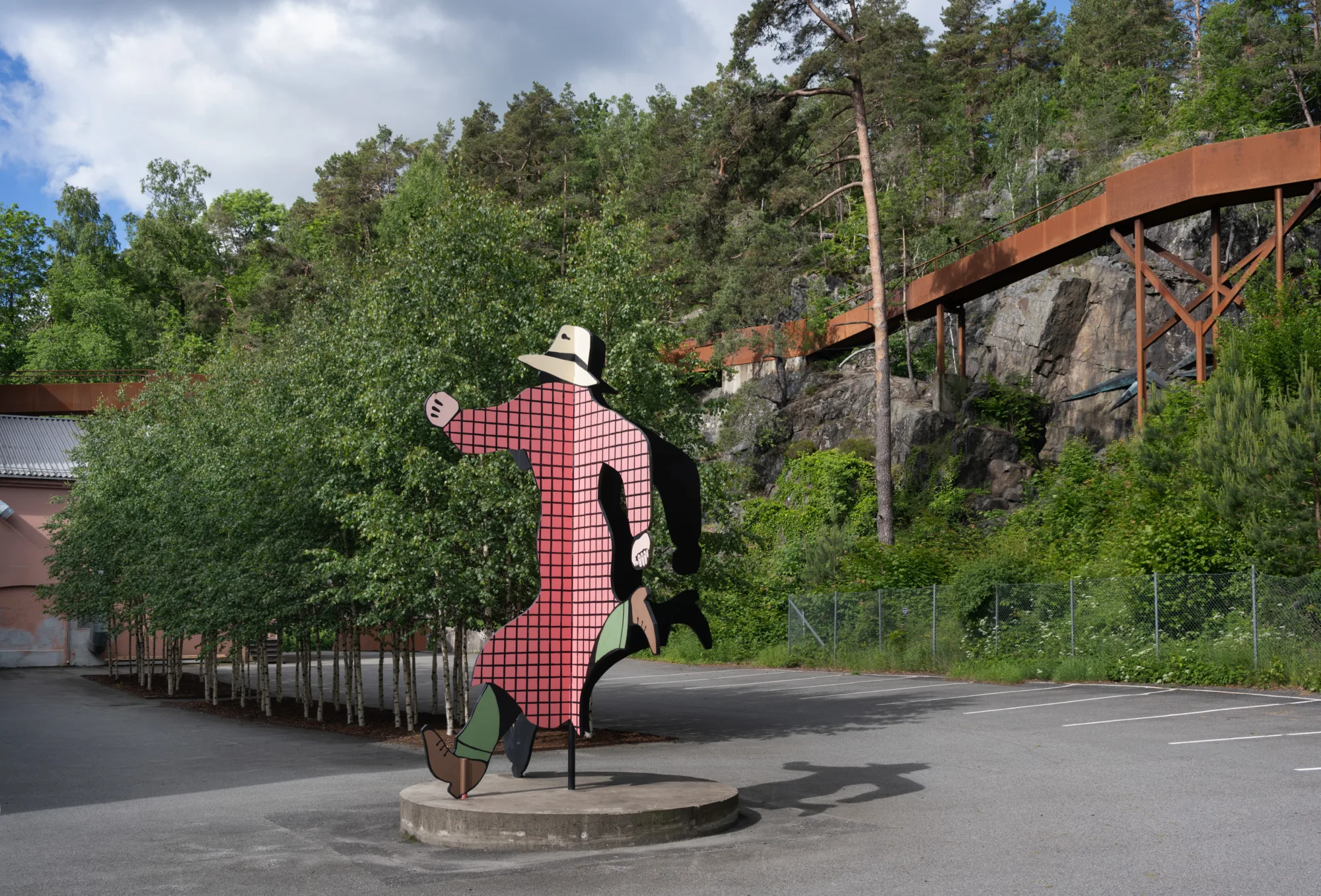
Mr. Walker (2019) by Jan Håfström
Mr. Walker is located at the back of Bomuldsfabriken Kunsthall, at the junction between the former factory area and the fenced-off mining area. Unlike several of the works in the sculpture park, this work stands in an area characterised by parked cars and activity around the art hall. The four-metre-high sculpture is made of hand-painted aluminium (30 mm) and consists of two juxtaposed silhouette forms. Depending on where the viewer stands, the figure can appear both as a two-dimensional silhouette and as a three-dimensional sculpture. The forward-leaning posture and the marked contours also give the figure a clear impression of movement.
The name Mr. Walker is taken from the cartoon character The Phantom, who uses this name when appearing without his mask and costume. In Håfström’s version, the figure appears wearing a hat, coat and sunglasses. Over several decades, Mr. Walker has developed into a recurring motif in Håfström’s artistic practice, appearing in paintings, prints, sculptures and installations. The figure brings together references to childhood memories, popular culture, literature and art history.
The sculpture is part of a larger group of works in which Mr. Walker appears in public space. For example, a seven-metre-high version of the figure stands in Järnvägsparken by Stockholm Central Station. The motif is also found in a number of other works by Håfström. In this way, the figure moves between different places, times, spaces and contexts.
Jan Håfström (b. 1937, Vallentuna, Sweden) works with a visual language in which certain figures and motifs continually return in new forms and contexts. Mr. Walker is the best known of these figures.