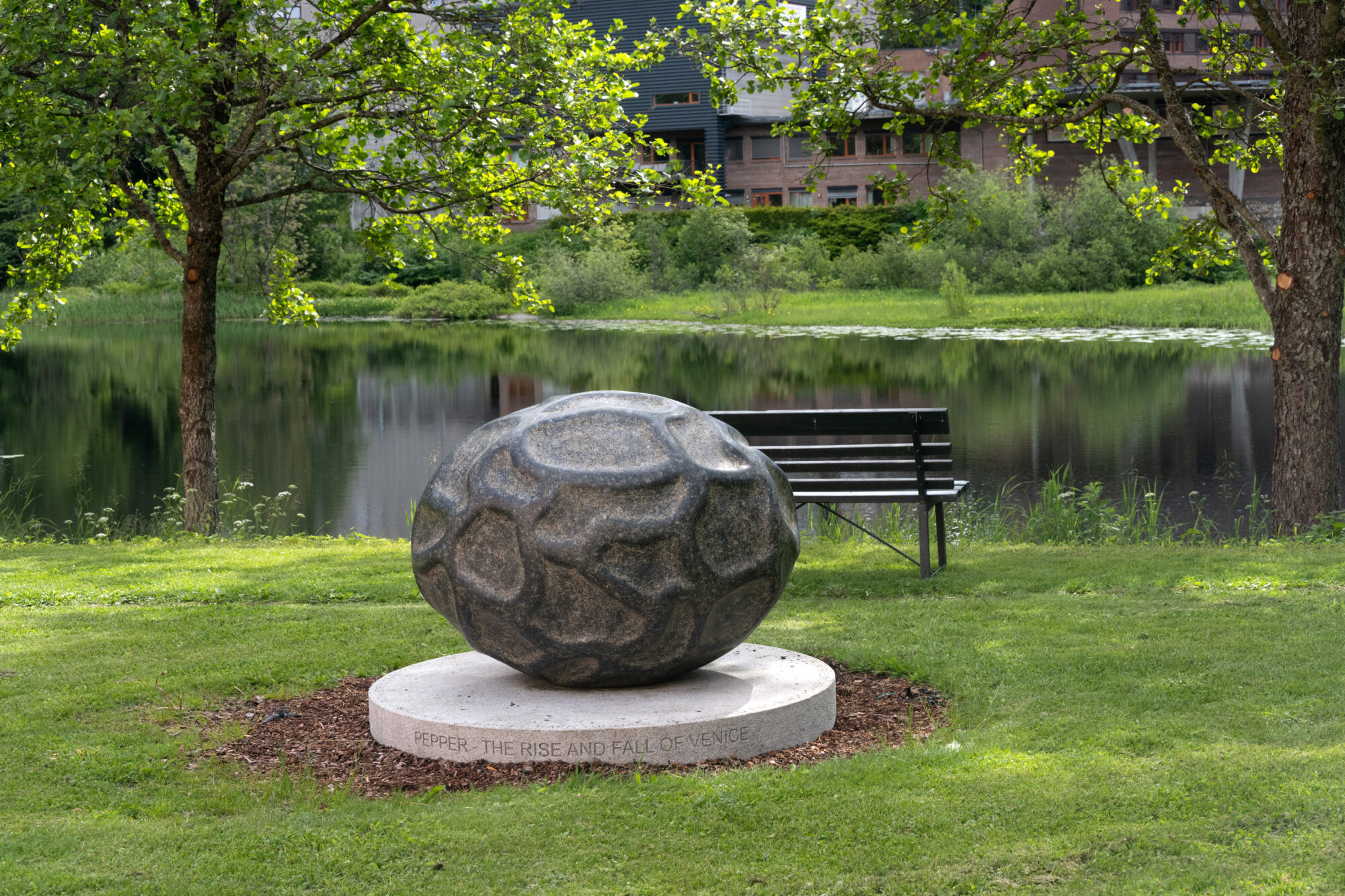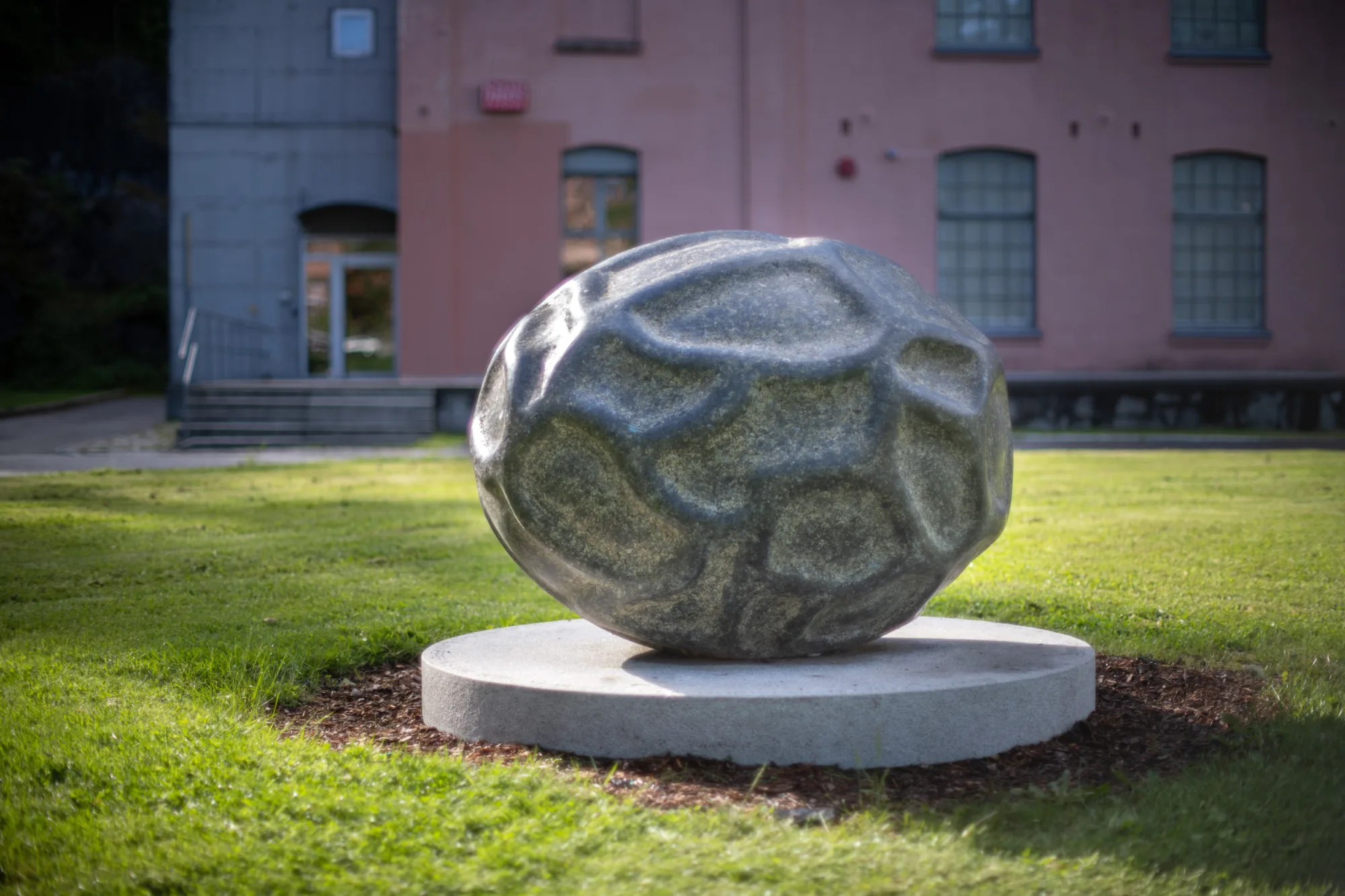
Pepper (2019) by Barbro Raen Thomassen
The sculpture Pepper was created for the exhibition Personal Structures – Identities, organised by the European Cultural Centre during the Venice Biennale in 2019. It was then transported to Arendal, where it was placed on the grass between Langsævannet and the Bomuldsfabriken Kunsthall building.
It was thanks to the spice pepper that Venice emerged as a powerful trading centre in the 14th century. But it was also pepper that led to the fall of Venice in 1497, when Vasco da Gama discovered the sea route to India and Portugal took over the trade. In its heyday, Venice distributed over 400 tonnes of pepper a year. At that time, pepper was the most sought-after spice in Europe, and it was a status symbol for wealthy households to have a kitchen that could offer pepper. Pepper was reportedly so expensive that dock workers had to work in pocketless work clothes, so that they could not hide peppercorns in their pockets.
Raen Thomassen is interested in the potential of small things. She looks for what is often overlooked and ignored, what is sometimes invisible and may seem insignificant, but which nevertheless proves to be of decisive importance.
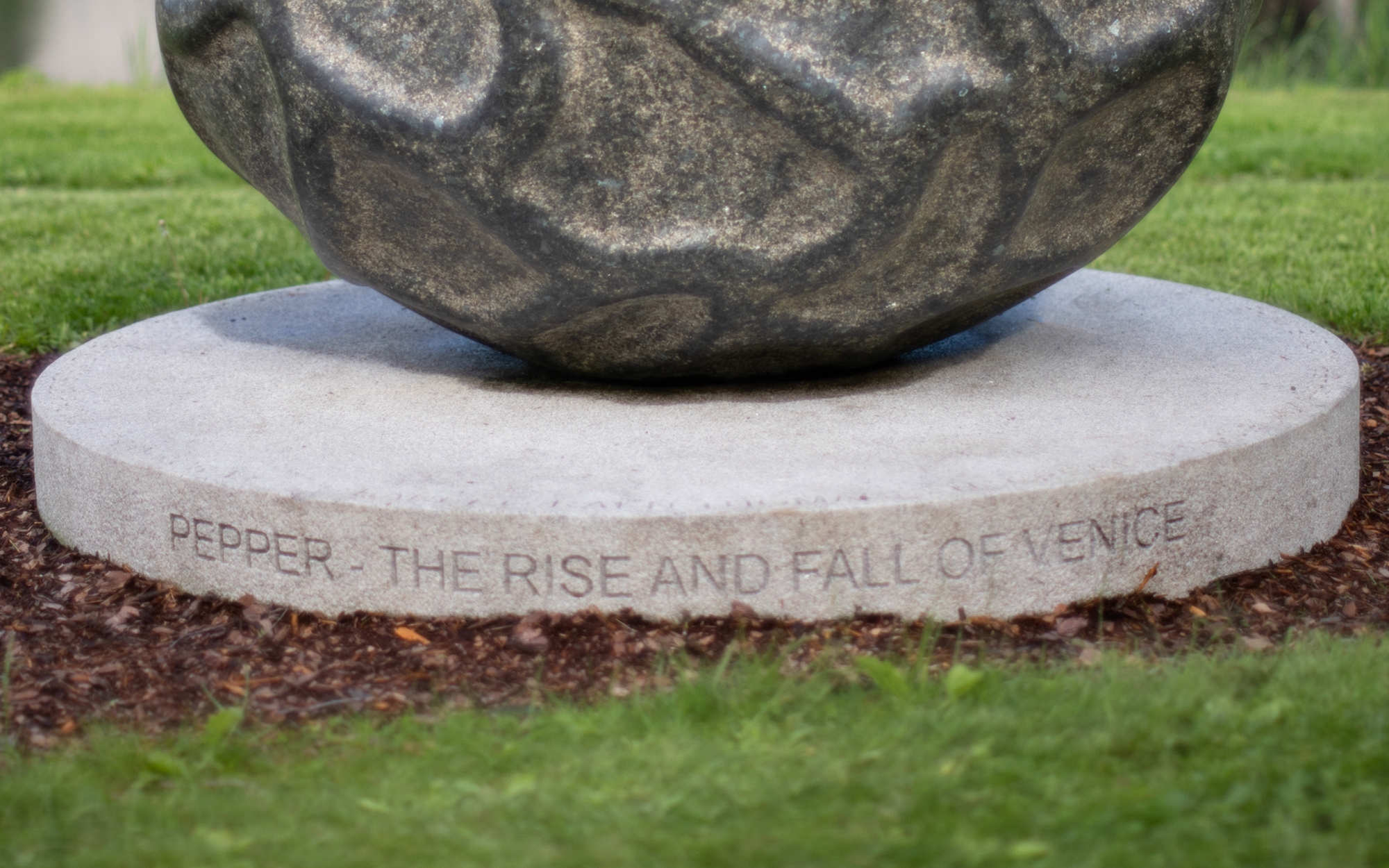
On the sculpture’s pedestal you can read:
“PEPPER – THE RISE AND FALL OF VENICE. I, BARBRO RAEN THOMASSEN, CREATED THIS BLACK PEPPER IN STONE IN THE YEAR 2019. I´M NORWEGIAN AND A WOMAN. I´M NOT ON FACEBOOK AND I HAVE NO MOBILE PHONE. PRAY FOR ME.”
Barbro Raen Thomassen (b. 1955, Tønsberg) lives and works in Birkenes municipality. She studied at the University of Bergen, the Academy of Western Norway and the École des Beaux-Arts in Angers, France.