Barnelunga (2022) by Per Inge Bjørlo
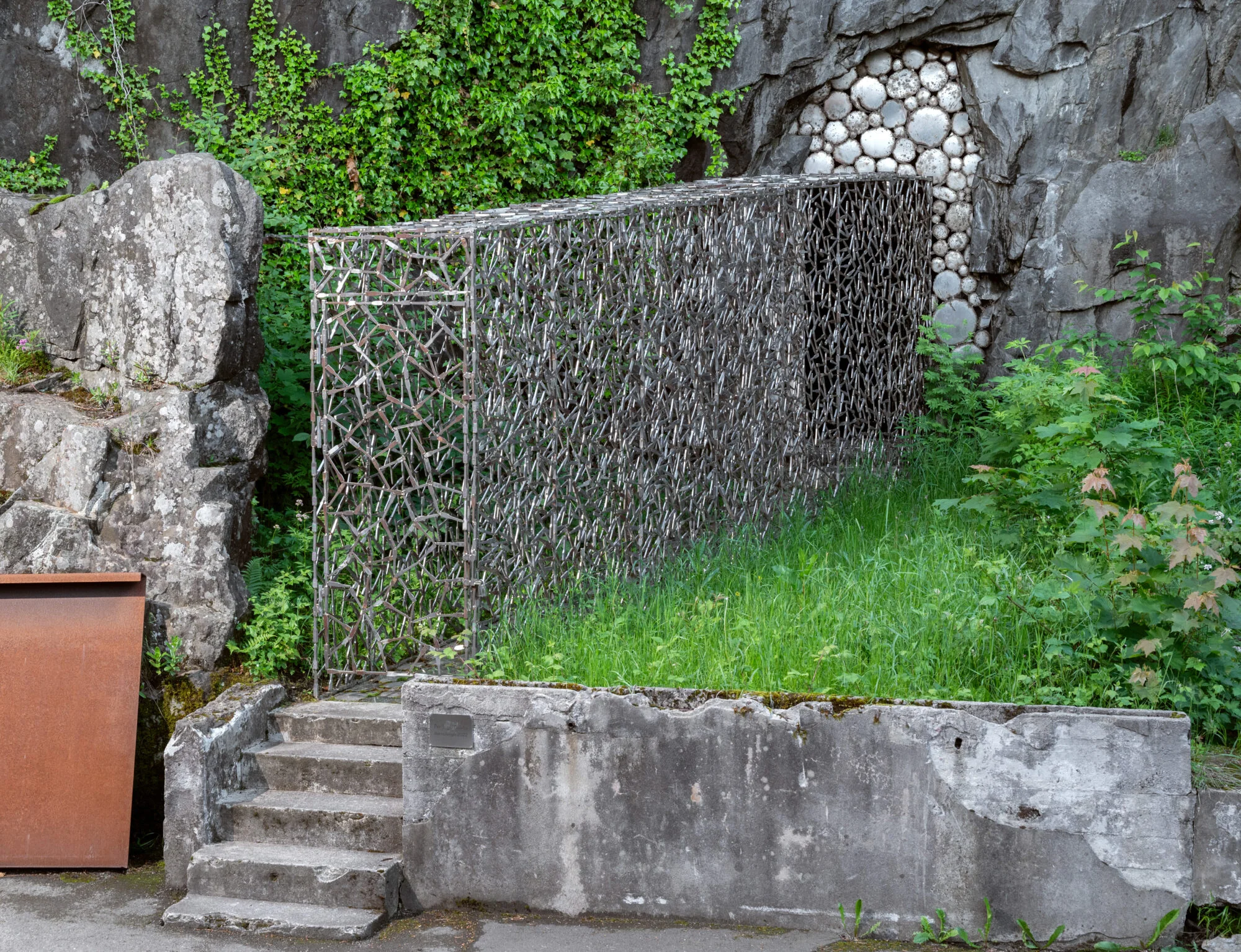
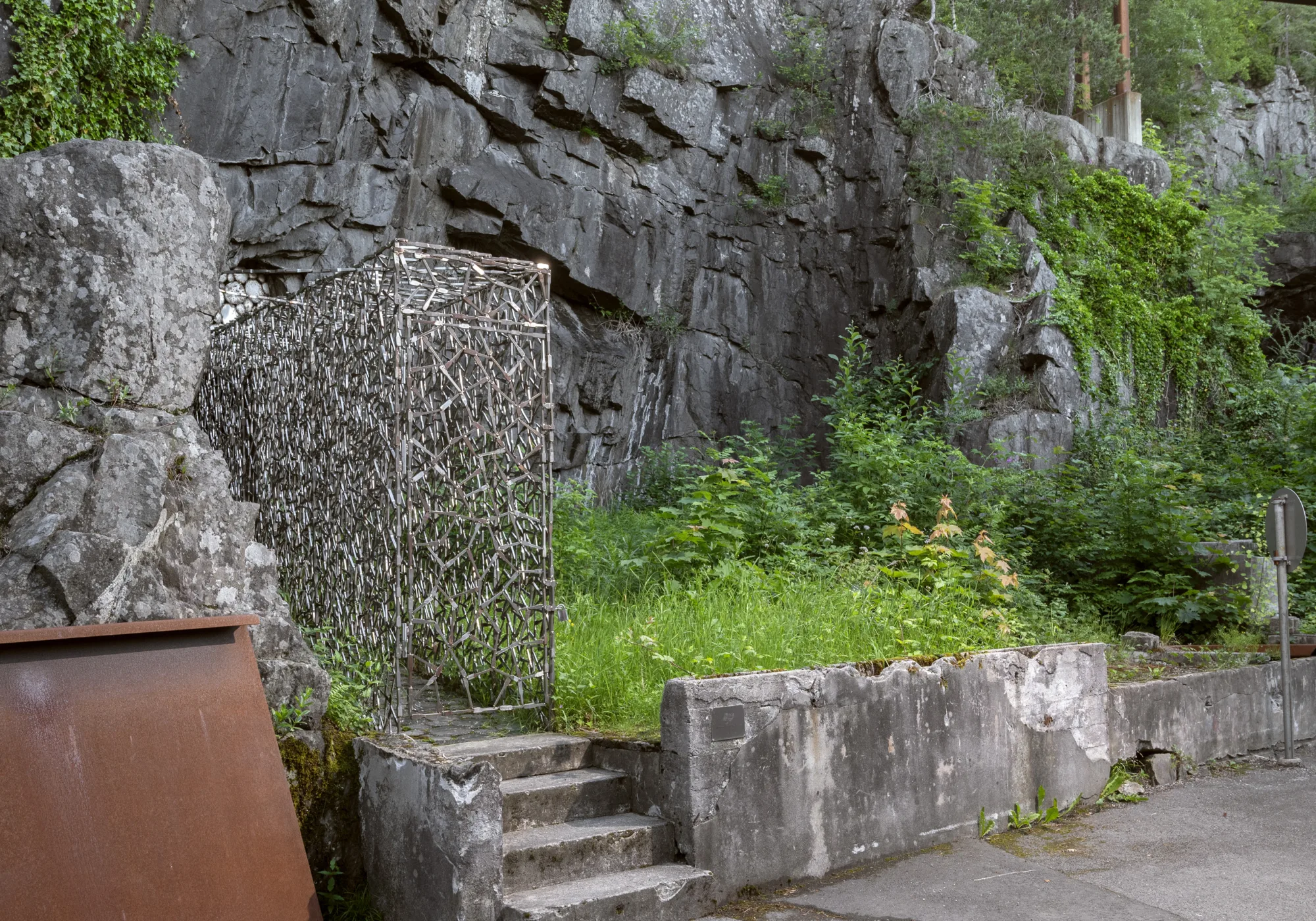
At the back of Bomuldsfabriken, a narrow passage leads towards an opening in the rock, into a mine chamber. Here lies Barnelunga (Children’s Lung), a site-specific installation by Per Inge Bjørlo. The passage extends over a water-filled shaft and ends in a cubic space. From here, visitors can see a sculpture placed above the water, inside the rock. The mine chamber is an active part of the installation. The rock walls enclose the work and create an acoustic environment where dripping water, echoes and silence become part of the experience.
The humidity in the air, the water surface and the darkness of the mine emphasise the connection to the place and the history contained in the rock. The installation is located in a part of the mine that differs from the open-pit mine. The passage is built from steel elements that have previously been used for stress testing metal. The material therefore bears traces of a process in which strength, resistance and breaking point are examined. The open steel construction forms walls, roof and gate. The structure appears open and closed at the same time. Light, air and sound pass freely through it, while the steel elements also form a clear structure that guides and limits movement through the installation. The passage marks the transition between the world outside and the more enclosed mine chamber within.
The title links the work to the history of the mine. For several hundred years, mining depended on labour from the local community, and children and young people also took part in work connected to the mines. Working conditions could be harsh, and exposure to dust, smoke and open flame left its mark on the body. At the same time, the title points towards themes such as breath, vulnerability and living conditions — motifs that recur in several parts of Bjørlo’s artistic practice. Industrial materials, bodily references, mining history and the physical properties of the site are woven together in an installation that cannot be separated from the surroundings for which it was created. The rock, the water and the space are not only the background of the work, but part of its form and mode of operation.
Per Inge Bjørlo (b. 1952, Spjelkavik) was among the first artists in Norway to develop installations in which the entire room becomes part of the work. Materials, architecture, sound, smell and bodily experience often play roles as important as the sculptural forms themselves.