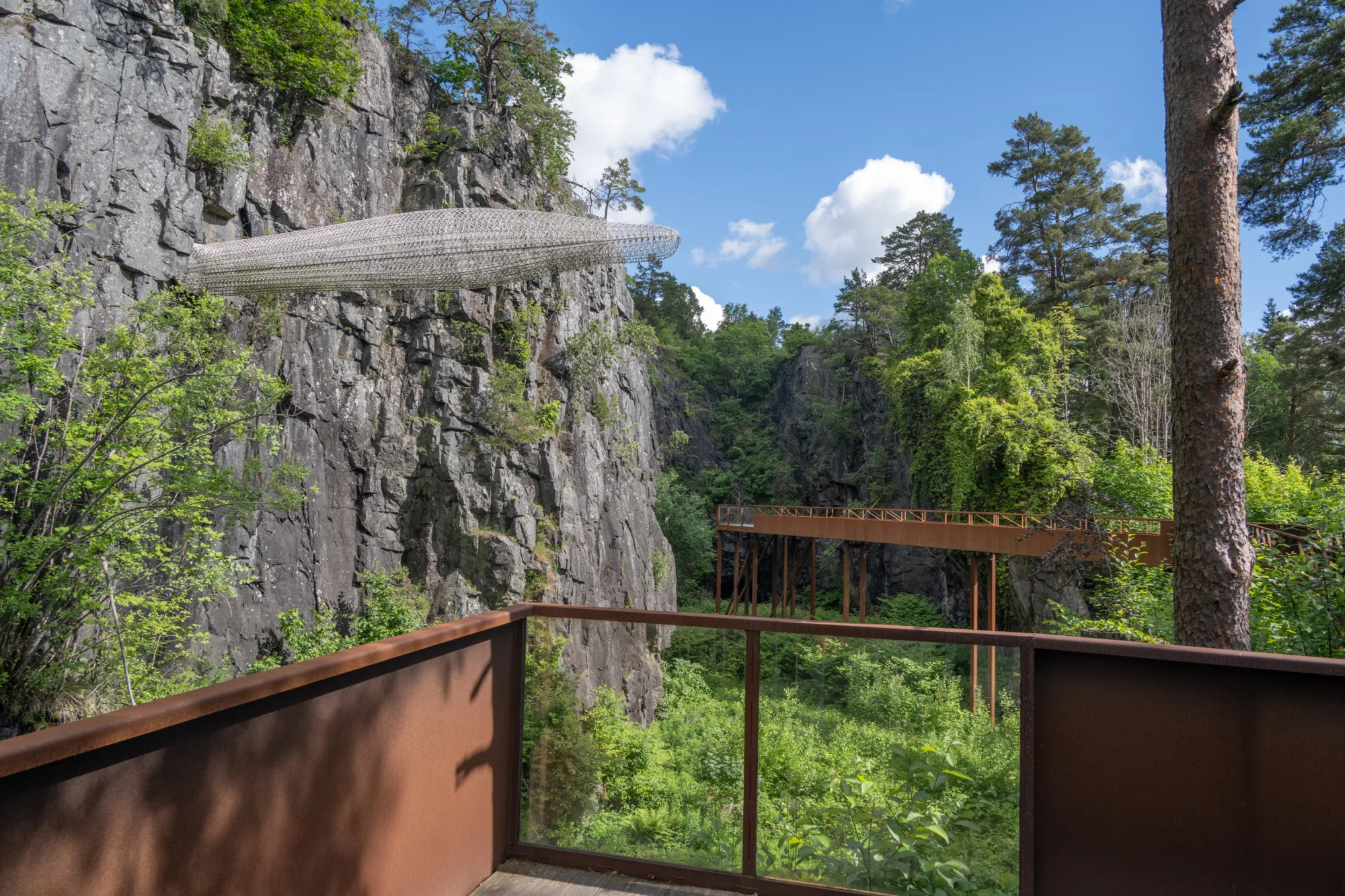
Dyret (1992) by Bård Breivik
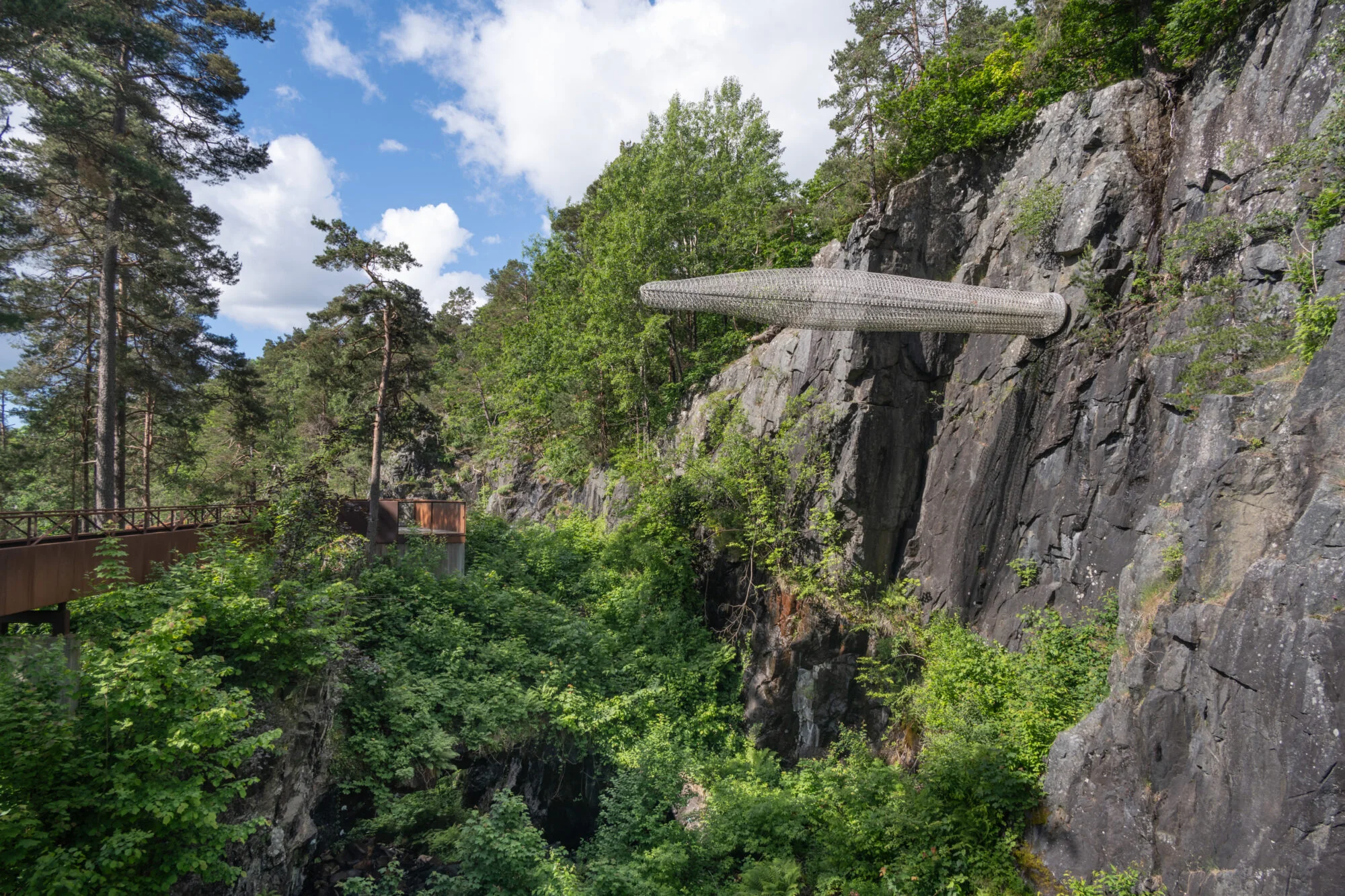
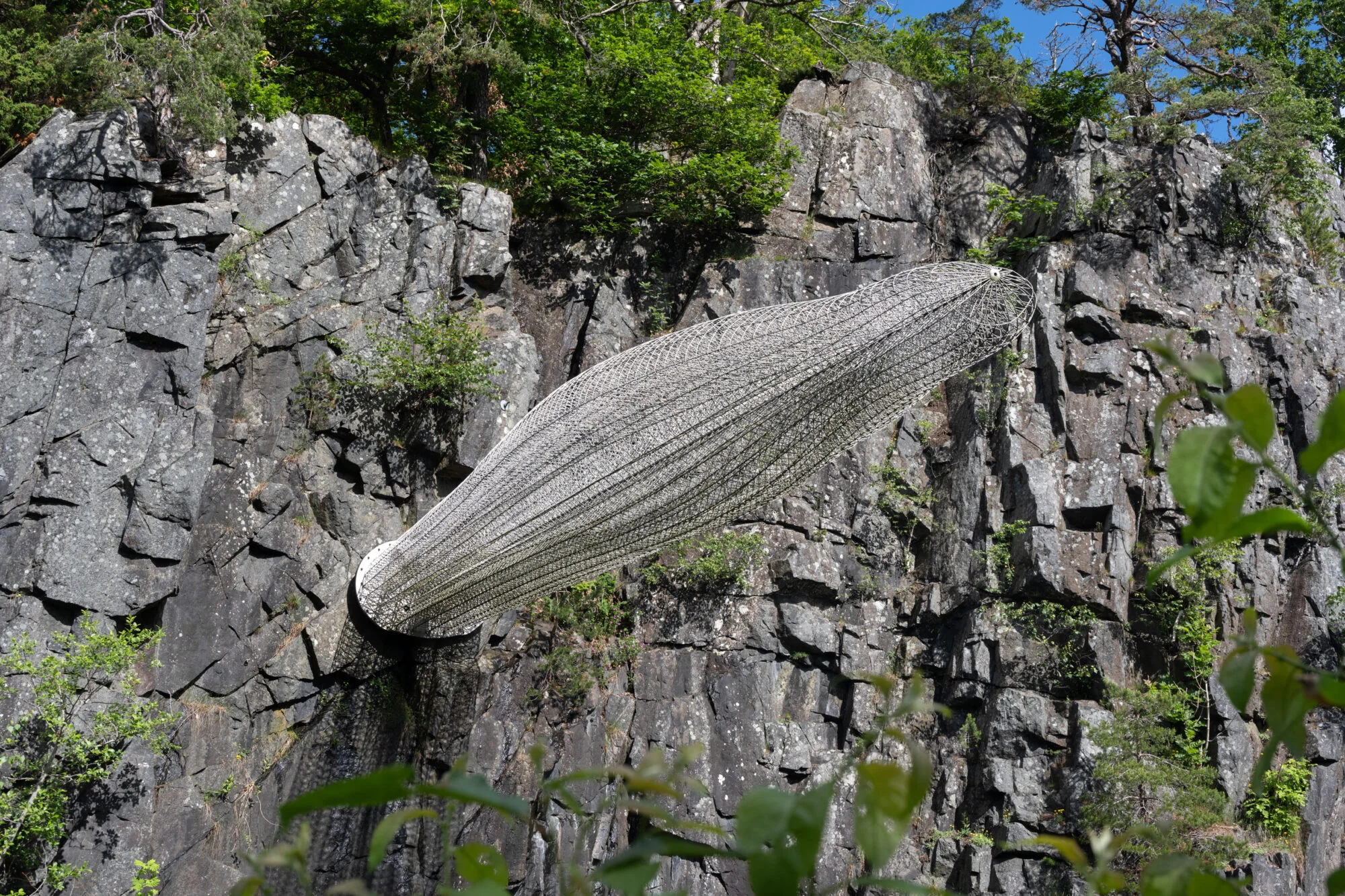
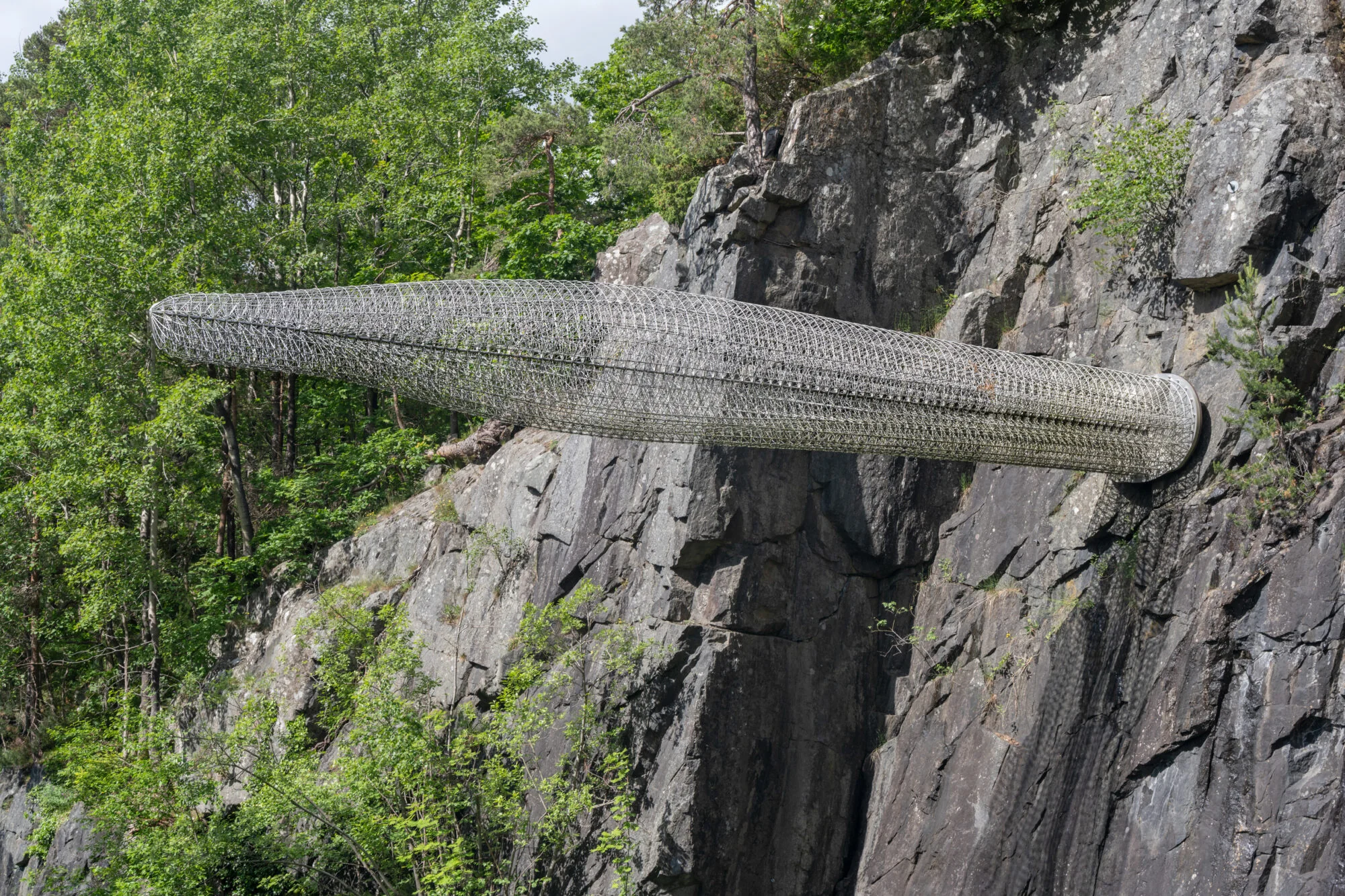
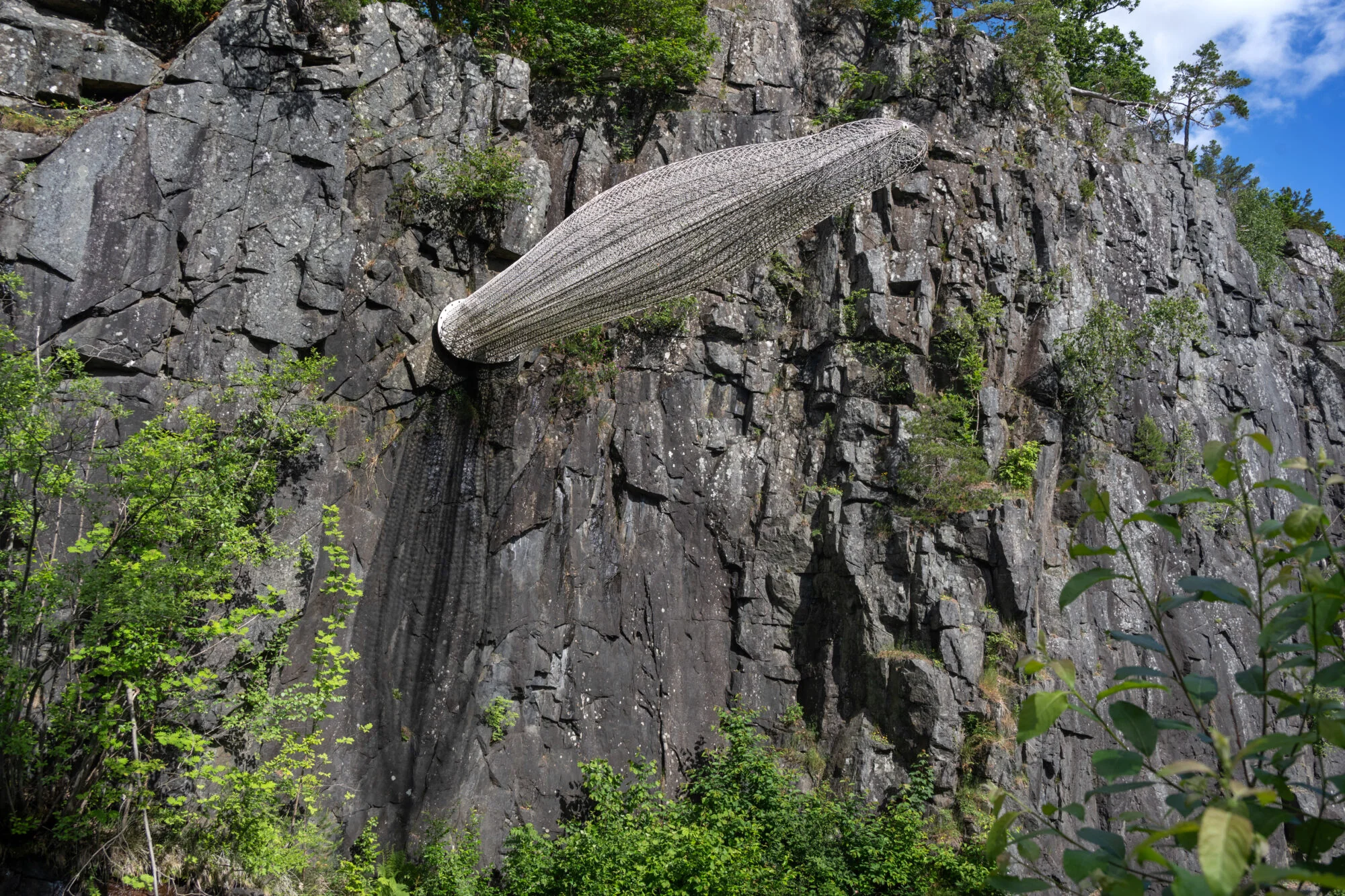
The monumental sculpture Dyret (The Animal) was originally created for the opening of the extension of Lillehammer Kunstmuseum during the 1994 Olympics. The sculpture is around 12.5 metres long and consists of a network of aluminium rods assembled with approximately 15,400 welding points. A supporting core forms the basic structure, surrounded by rods that provide both strength and lightness. The shape changes depending on the viewing angle; from the footbridge, it can appear alternately dense and open, narrow or wide, affecting the experience of size and volume.
The work shows Breivik’s interest in the interaction between craft and technology. The shape was developed using digital modelling in the early 1990s, and the sculpture was produced in China in collaboration with specialised workshops. Its realisation required extensive engineering work and precise craftsmanship. Breivik donated Dyret to Bomuldsfabriken when the sculpture park was still only a dream carried by Harald Solberg, then director of the art hall. In 2018, the sculpture was installed in the rock face, where it extends out over the open-pit mine.
Bård Breivik (1948–2016) was a key Norwegian visual artist, educated in Bergen and London, and one of the pioneers of installation art in Norway. He worked in the borderland between sculpture, architecture and landscape. The design of Dyret was based on a stay in Brazil, with inspiration both from manatees and from construction principles in the building traditions of Indigenous peoples in the Amazon.